18-Inch Front Motorcycle Rims: Selection Guide and the Manufacturing Process Behind Jinhua Yosocoma Honda Rims
Selection Guide for 18-Inch Front Motorcycle Rims
Choosing an 18-inch front motorcycle rim means stepping away from the more common 19-inch or 21-inch front wheels. The 18-inch front rim serves specific bikes and riding styles. Knowing which one fits your machine requires looking at three things: fork clearance, tire availability, and intended terrain.
What bikes use an 18-inch front rim
Classic British and Japanese standards from the 1970s and 1980s often came with 18-inch front wheels. Think Honda CB750, Yamaha XS650, Triumph Bonneville. Modern bikes using an 18-inch front rim are rarer but include certain custom cruisers, flat-track conversions, and vintage-inspired machines. Before buying, check the motorcycle's original specifications. Swapping from a 19-inch to an 18-inch front rim changes the bike's geometry. The front end drops roughly half an inch. Steering becomes quicker, but trail decreases, potentially causing instability at highway speeds.
Tire selection for 18-inch front rims
The tire market for 18-inch front motorcycle rims is smaller than for 19-inch or 21-inch rims, but quality options exist. Avon, Bridgestone, Continental, and Pirelli all produce front tires in 90/90-18, 100/90-18, and 110/80-18 sizes. The 90/90-18 suits lighter bikes and vintage machines with narrow rims (1.85–2.15 inches wide). The 100/90-18 fits rims from 2.15–2.50 inches and handles heavier bikes. The 110/80-18 is a lower-profile option for aggressive cornering on custom builds.
Material and construction choices
Aluminum rims (6061-T6 or 7075 alloy) are the standard for 18-inch front motorcycle rims. They balance strength and weight. 7075 is harder but more brittle. 6061 bends rather than cracks—preferable for street riding where impact resistance matters.
Carbon fiber rims exist for 18-inch fronts but cost several thousand dollars. The weight savings matter for racing. For street use, the expense rarely justifies the benefit.
Selection checklist before buying
- Measure the fork clearance at full compression
- Confirm the spoke count matches the hub
- Decide on rim width based on desired tire size
- Choose alloy type (6061 for street, 7075 for racing)
- Verify rotor bolt pattern and speedometer drive fitment
- Order matching spokes and nipples (standard length may not fit wider rims)
Manufacturing Process for Jinhua Yosocoma 18-Inch Honda Motorcycle Rims
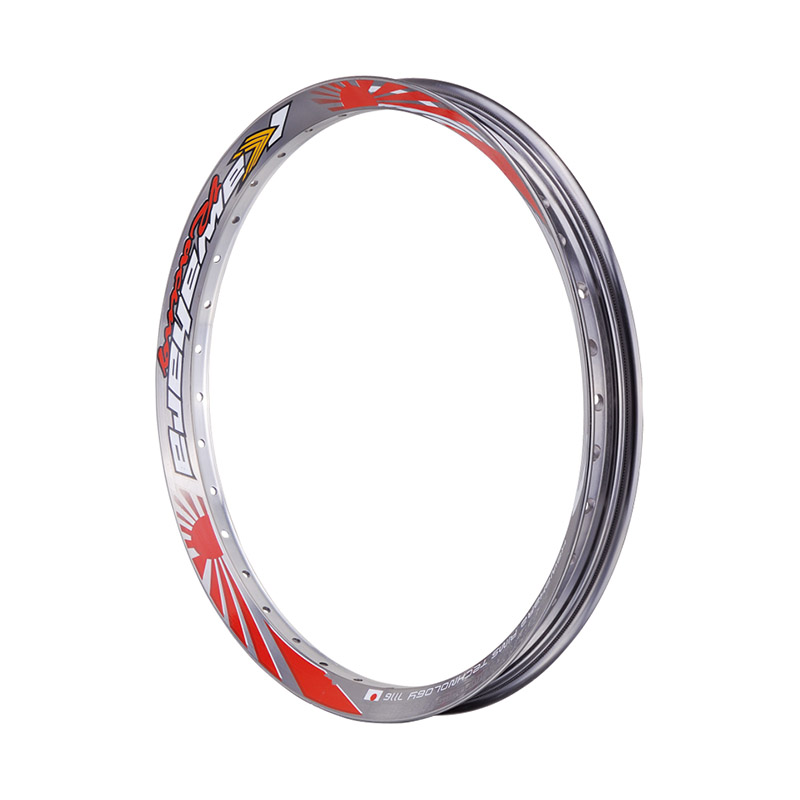
Jinhua Yosocoma has built a reputation in the motorcycle wheel industry by focusing on one thing: producing rims that fit Japanese bikes accurately. Their 18-inch Honda motorcycle rims follow a manufacturing sequence that prioritizes dimensional consistency and material integrity.
Coil slitting and straightening
The aluminum coil feeds into a slitting line. A rotary cutter slices the wide coil into strips of specific width. The strip width determines the rim's final cross-sectional profile. After slitting, the strip passes through a straightener. Rollers remove any curvature from the coiling process. A straight strip is essential for consistent forming.
Roll forming the rim channel
The straightened strip enters a series of roll forming stations. Each station has a pair of contoured rollers that progressively shape the flat strip into a U-channel. The process happens cold. No heating. Cold working strain-hardens the aluminum, increasing its strength. For an 18-inch Honda motorcycle rim, the roll forming line uses ten to fourteen roller stations, each making a small change to the strip's shape.
Welding the rim into a hoop
The roll-formed channel exits the line as a long, shaped strip. A cutting shear slices it to length. The calculated length equals the rim's circumference plus a small overlap for welding. The cut strip goes to a flash butt welding machine. The two ends clamp together. An electrical current passes through the joint, heating the aluminum to its melting point. The machine forges the ends together under pressure. The weld is as strong as the base material—no filler rod, no flux.
Trimming and sizing
The welded hoop is rough. The weld flash (excess aluminum squeezed out during welding) gets trimmed flush with a carbide cutter. Then the hoop goes into a sizing press. The press expands the hoop slightly, ensuring the rim is perfectly round and the correct diameter for an 18-inch tire. Sizing also corrects any ovality introduced during welding.
Drilling spoke holes
The rim moves to a CNC drilling station. The machine indexes the rim to the correct rotational position. Drilling heads bore each spoke hole at the precise angle required for a Honda hub. Honda rims typically use an offset drilling pattern—the left and right spoke holes alternate around the rim. The CNC program for each Honda model (CB, CX, GL, etc.) lives in the machine's memory. Changeover between models takes minutes.
Countersinking and deburring
Each spoke hole receives a countersink on the inside of the rim. The countersink seats the spoke nipple at the correct angle, preventing the nipple from bending when the wheel is tensioned. A deburring tool follows the drill, removing sharp edges from both the inside and outside surfaces. Sharp edges cut spokes during assembly or cause stress risers that lead to cracking.
Surface finishing
Jinhua Yosocoma offers several finishes for its 18-inch Honda motorcycle rims.
- Polished: The rim passes through a series of polishing wheels with progressively finer abrasives. Final polish uses a cloth wheel with compound. The result is a mirror finish that requires clear coating to prevent oxidation.
- Anodized: The rim goes into an acid bath, then receives an electrical current that builds an aluminum oxide layer. Anodizing can be clear or colored (black, gold, or silver are common). Anodized finishes are durable and resist UV fading.
- Powder-coated: A sprayed-on polymer powder fuses to the rim in a curing oven. Powder coating offers unlimited colors but adds thickness that can affect spoke nipple fitment.


 English
 Español


 浙公网安备33071802889078

