

 English
 Español
Mixed-terrain motorcycle riding is no longer limited to riders who spend the entire day on dirt. Many off-road enthusiasts now move between gravel roads, hard-packed trails, loose soil, forest paths, and short stretches of pavement during the same ride. This change raises an important question: can an Off-road Motorcycle Tire Rim handle such varied riding conditions without compromising tire fitment or handling?
The answer depends on more than rim material alone. Rim diameter, width, construction, spoke arrangement, tire profile, hub compatibility, and the relationship between the wheel and suspension all influence how a motorcycle behaves across different surfaces.
A wheel that performs well in deep dirt may feel very different on pavement. Likewise, a setup designed around road-oriented tires may not provide the compliance required on rocks or uneven trails. Understanding this relationship helps riders build a wheel configuration that matches genuinely mixed riding.
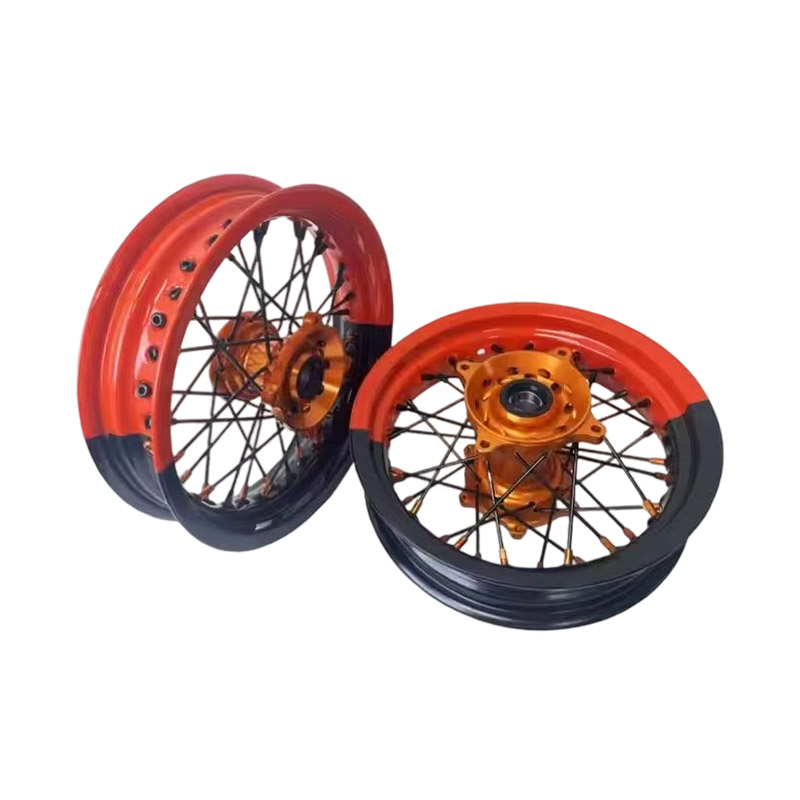
Mixed Terrain Changes the Role of a Motorcycle Rim
Off-road riding places different demands on a wheel than smooth asphalt. Loose surfaces require the tire to maintain traction while the wheel encounters rocks, ruts, roots, and sudden changes in elevation. Pavement introduces another set of forces, including stronger braking loads, higher cornering forces, and more consistent high-speed rotation.
That makes an Off-road Motorcycle Tire Rim part of a larger system rather than an isolated component.
- Loose dirt requires predictable tire deformation and traction.
- Rocky trails place impact loads on the rim edge and spokes.
- Gravel surfaces demand stability without making the steering excessively heavy.
- Paved roads reward a controlled tire profile and stable wheel geometry.
A mixed-terrain setup therefore needs a balance between impact tolerance, tire compatibility, steering response, and overall wheel geometry.
Why 21-Inch and 18-Inch Wheels Remain Common
Traditional enduro and off-road motorcycles frequently use a 21-inch front wheel and an 18-inch rear wheel. Current aftermarket wheelsets continue to offer configurations around 1.6 × 21 inches at the front and 2.15 × 18 inches at the rear. These dimensions are widely associated with enduro applications.
| Wheel Position | Common Example | Typical Riding Consideration |
| Front | 1.6 × 21 in | Helps roll over uneven terrain and ruts |
| Rear | 2.15 × 18 in | Supports common enduro and dual-purpose tire formats |
| Alternative Front | 1.85 × 21 in | May support different tire-width requirements |
| Alternative Rear | 2.50 × 18 in | Useful for certain wider-tire configurations |
The larger front diameter can help the motorcycle pass over obstacles with less abrupt interaction between the tire and terrain. The 18-inch rear format also provides a broad selection of off-road and dual-sport tire patterns.
However, these dimensions should never be treated as universal specifications. Fork clearance, swingarm space, brake components, axle dimensions, hub design, and tire manufacturer recommendations all matter.
Rim Width Can Change the Tire Profile
Rim diameter receives considerable attention, but rim width can be just as important. A tire mounted on a rim that is too narrow or too wide may develop a profile different from the intended design.
That difference can become noticeable on mixed terrain. A very rounded profile may feel different during cornering, while an excessively squared profile can alter steering response and contact behavior.
Common Width Considerations
- Narrower off-road rims: often pair with tire configurations designed around loose or uneven terrain.
- Medium-width rims: can provide a useful compromise for dual-surface riding.
- Wider rims: may support larger tire formats, but clearance and chassis compatibility become increasingly important.
Some aftermarket 17-inch Supermoto wheel kits, for example, offer different front and rear rim widths depending on whether the motorcycle is intended for asphalt, flat-track use, or a combination of dirt and pavement.
Material Matters, But Construction Matters Too
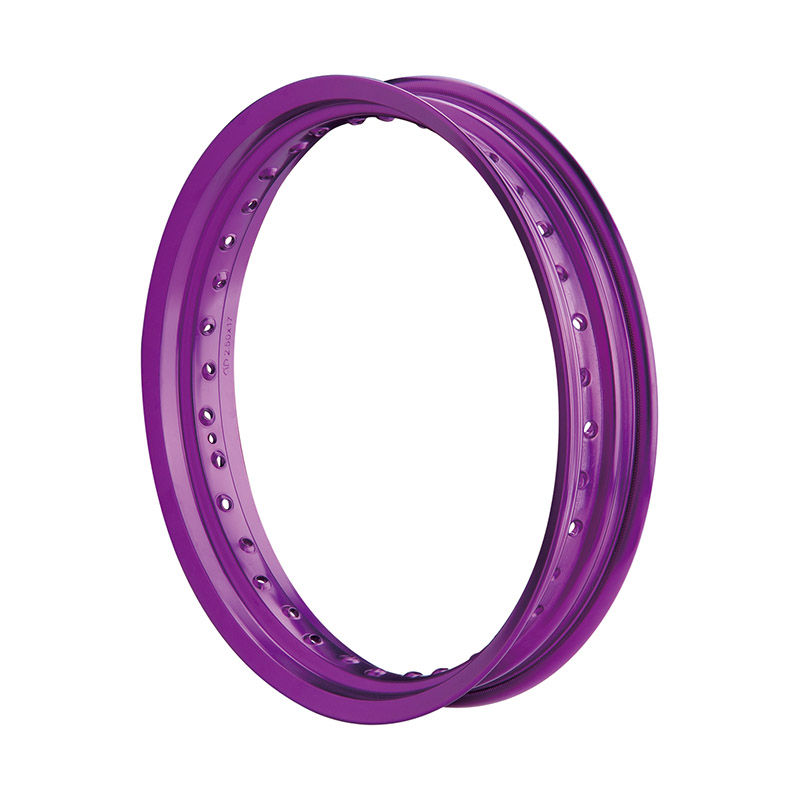
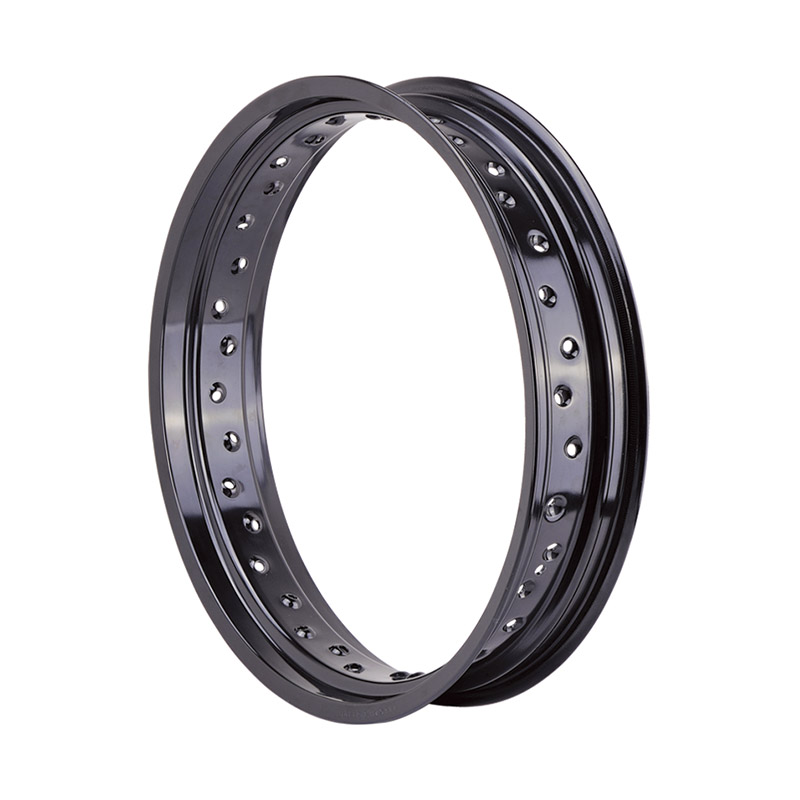
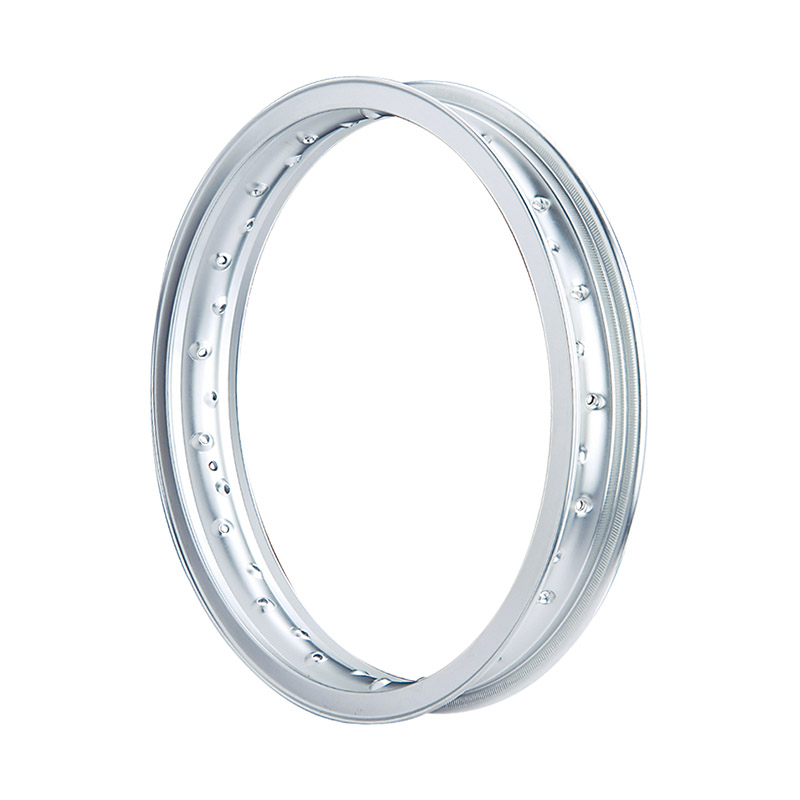
Aluminum alloy is widely used in modern motorcycle rims because it offers a useful combination of low mass, stiffness, and manufacturability. However, simply specifying “aluminum alloy” does not describe the complete wheel.
Different wheel components can use different aluminum grades. Current aftermarket off-road products commonly list materials such as 7050-T6 aluminum for rims and 6082-T6 aluminum for CNC-machined hubs. Some wheelsets also use 304 stainless-steel spokes and alloy or nickel-plated nipples.
| Component | Example Material | Purpose |
| Rim | 7050-T6 aluminum | Structural wheel ring |
| Hub | 6082-T6 aluminum | Connects wheel to axle and braking system |
| Spokes | 304 stainless steel | Transfers loads between hub and rim |
| Nipples | Alloy / plated metal | Spoke tension adjustment and retention |
This illustrates why the specification of an Off-road Motorcycle Tire Rim should include the complete wheel structure rather than focusing only on the alloy grade.
Spoke Tension Is Part of the Wheel System
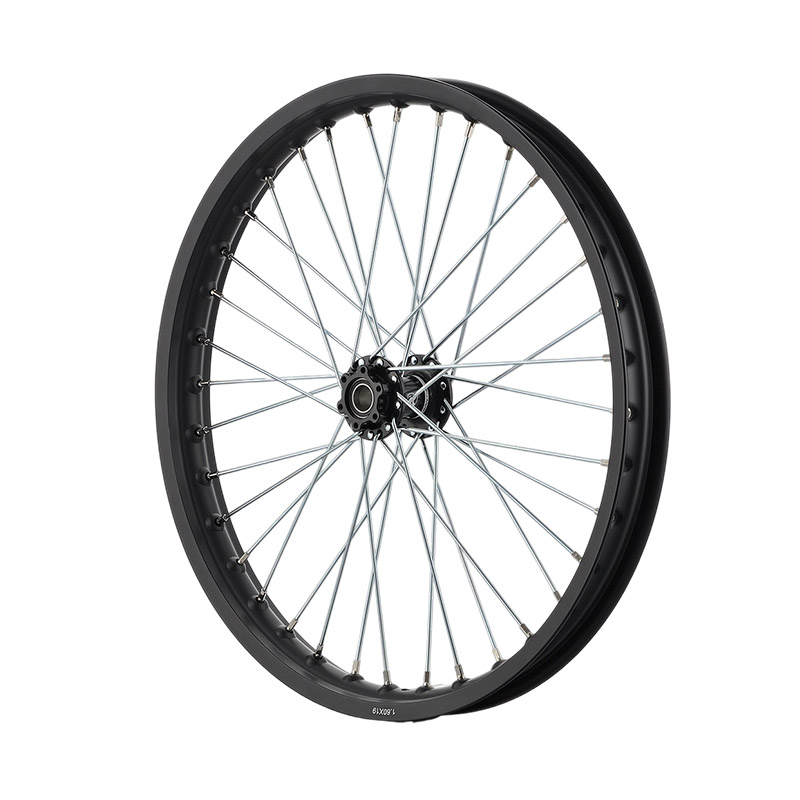
Spoked wheels remain common in enduro and off-road motorcycles because the spoke structure can distribute loads across the wheel assembly. Some current wheelsets use 36 spokes with diameters around 2.6 mm or 3.0 mm, depending on the intended application.
The important point for mixed-terrain riding is not simply the number of spokes. The hub, spoke diameter, rim profile, nipple design, and wheel assembly all work together.
- A correctly assembled wheel maintains consistent spoke tension.
- The rim needs sufficient structural support for expected impact loads.
- Hub and axle dimensions must match the motorcycle.
- Bearing, spacer, rotor, and sprocket interfaces require accurate compatibility.
These details become particularly important during mixed riding because the wheel may experience repeated transitions between relatively smooth pavement and irregular off-road surfaces.
How Tire Choice Changes the Rim's Working Environment
A rim does not determine traction by itself. The tire mounted to it has a major influence on how forces reach the wheel.
A deep-knob tire can provide strong bite on loose terrain but may feel less composed on pavement. A road-oriented tire can behave predictably on asphalt yet offer limited traction once the motorcycle enters mud, loose gravel, or soft soil.
Dual-purpose tires sit between these extremes. Their tread pattern attempts to provide usable traction across multiple surfaces, making them relevant to riders who do not want separate wheelsets for every type of terrain.
Some wheel manufacturers and retailers explicitly classify tires into road, off-road, and trial/dual categories, reflecting the different compromises involved in mixed riding.
Clearance Can Become the Hidden Limitation
A wheel can have the correct nominal diameter and still be unsuitable for a particular motorcycle.
Tire width, rim width, chain clearance, fork clearance, brake rotor position, and spacer dimensions all deserve attention.
This becomes especially important with wider rear tires. Some wheel suppliers note that super-wide configurations may require changes to wheel offset or other components to prevent chain contact.
- Check the distance between the rear tire and chain.
- Check fork-leg and fork-guard clearance.
- Confirm brake rotor alignment.
- Verify axle and spacer dimensions.
- Check tire clearance at full suspension compression.
These checks are especially relevant for riders changing from an original wheel specification to a wider or alternative rim.
Mixed-Terrain Riding May Favor a Two-Wheelset Strategy
Not every motorcycle needs a single wheel configuration to handle every surface. Riders who frequently alternate between serious trail riding and aggressive pavement riding may benefit from keeping separate wheelsets.
| Riding Pattern | Potential Wheel Direction | Main Consideration |
| Mostly technical trails | 21/18 off-road setup | Obstacle control and tire availability |
| Dirt + gravel + pavement | 21/18 dual-purpose setup | Balanced tire selection |
| Mostly asphalt with occasional dirt | 17-inch Supermoto setup | Road tire availability and handling |
| Track-focused Supermoto | 17-inch performance setup | Cornering and tire compatibility |
Rider discussions around Supermoto conversions frequently highlight this distinction. A 17-inch wheel can expand the range of road-oriented tire options, while larger off-road wheels remain advantageous for dirt-focused riding.
Does a Stronger Rim Always Make a Better Mixed-Terrain Setup?
Not necessarily. A wheel designed around harsh impact resistance may not automatically provide the handling characteristics a rider wants on pavement. Conversely, a lightweight road-oriented wheel may not be appropriate for repeated hard impacts on rocky trails.
The useful target is application-matched construction.
For mixed-terrain motorcycles, this means considering:
- Rim diameter and width
- Alloy and rim profile
- Spoke size and configuration
- Hub and axle compatibility
- Tire size and tread pattern
- Brake and sprocket interfaces
- Available clearance around the motorcycle
What Should Riders Check Before Buying?
A product specification sheet can answer many compatibility questions before the wheel reaches the motorcycle.
- Wheel size: Confirm the exact diameter and rim width.
- Material: Check the alloy grade and manufacturing method where available.
- Hub: Verify axle diameter, bearing arrangement, and rotor interface.
- Spokes: Review spoke material, quantity, and diameter.
- Fitment: Confirm motorcycle model, model year, and OEM component compatibility.
- Tire compatibility: Match the tire size with the rim manufacturer's recommendations.
- Clearance: Confirm that the selected tire does not interfere with the chain, fork, swingarm, or guards.
The Real Test Is the Entire Wheel-and-Tire Combination
An Off-road Motorcycle Tire Rim can be suitable for mixed-terrain riding, but its performance cannot be judged separately from the tire, hub, spokes, suspension geometry, and motorcycle fitment.
A 21/18-inch setup may remain attractive for riders who spend substantial time on trails, gravel, and uneven surfaces. A 17-inch configuration can make sense for motorcycles moving toward Supermoto-style road riding. Between these approaches, dual-purpose tires and carefully matched rim widths can create a practical compromise for riders who regularly cross from dirt to pavement.
The key question is therefore not simply whether a rim is “off-road ready.” It is whether the rim diameter, width, construction, tire profile, and motorcycle compatibility work together for the surfaces the rider actually encounters.
As mixed-terrain riding continues to blur the boundary between enduro, dual-sport, and Supermoto use, wheel specifications are becoming increasingly important to the overall riding experience. A properly matched wheel-and-tire package can give riders greater freedom to move between surfaces without forcing every motorcycle into a single-purpose configuration.


 浙公网安备33071802889078

