

 English
 Español
A 17-inch wheel can dramatically change the character of a dirt bike. A motorcycle originally developed around a 21-inch front wheel and an 18-inch rear wheel can take on a very different role after moving to a 17-inch Supermoto configuration. The change is not simply visual. Wheel diameter, rim width, tire selection, braking hardware, and chassis geometry all become part of the conversion.
That raises an interesting question: are Motorcycle Supermoto Alloy Wheels primarily designed for street riding, or can the same setup become a practical tool for track use?
The answer depends on the wheel specifications and the way the motorcycle is configured. A road-focused build and a Supermoto track bike may share the same 17-inch wheel diameter while using different tires, brakes, gearing, and suspension settings.
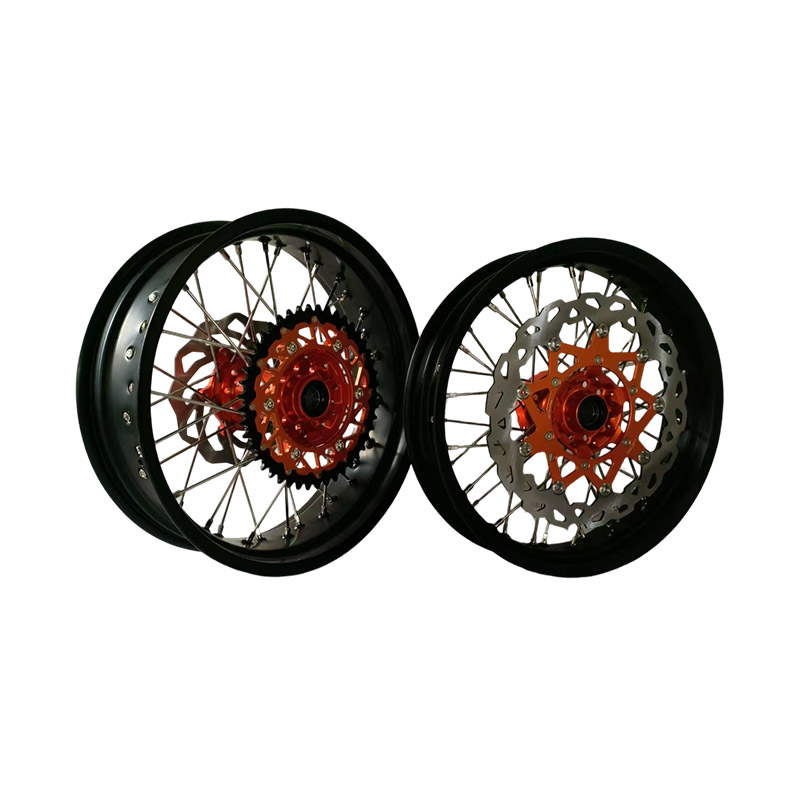
Why Did 17 Inches Become a Supermoto Standard?
Supermoto developed around the idea of combining dirt-bike chassis characteristics with road-oriented wheels and tires. The 17-inch format became closely associated with this style because it offers access to a broad range of motorcycle street and performance tires.
Modern aftermarket wheelsets commonly use a 3.5 × 17-inch front rim and a 4.25 × 17-inch rear rim. These dimensions are marketed for full-size dirt-bike Supermoto conversions and are available for models such as Honda CRF, Yamaha YZ, KTM, Suzuki DR-Z and other platforms.
| Wheel Position | Common Supermoto Size | Typical Tire Example |
| Front | 3.5 × 17 in | 110/70-17 or 120/70-17 |
| Rear | 4.25 × 17 in | 140/70-17 or 150/70-17 |
These are reference configurations rather than universal specifications. Tire manufacturers publish their own approved rim-width ranges, while motorcycle manufacturers may have specific clearance and brake requirements.
Street Riding Gets a Different Tire Selection
One major reason riders convert to 17-inch wheels is tire availability. A 17-inch front wheel opens access to a much wider range of street-oriented motorcycle tires compared with some less common racing wheel sizes.
Recent rider discussions show this distinction clearly. Riders using a 16.5-inch front wheel for racing frequently report difficulty finding conventional street tires, while 17-inch wheels provide substantially more street-oriented choices.
This makes 17-inch Motorcycle Supermoto Alloy Wheels particularly interesting for motorcycles that need to move between commuting, weekend riding, and occasional track sessions.
- Street tires: designed around road use, wet-weather behavior, mileage, and legal road operation.
- Sport tires: offer a stronger focus on cornering grip and aggressive road riding.
- Track-oriented tires: prioritize circuit performance and may have different temperature requirements.
- Rain or race tires: are specialized options that may not be suitable for ordinary road use.
Does the Same 17-Inch Wheel Work on Street and Track?
Usually, the wheel diameter itself is not what separates a street setup from a track setup. The complete configuration does.
A Supermoto motorcycle used for street riding may use DOT-approved tires, standard or moderately upgraded brakes, road-oriented gearing, and suspension settings intended for varied surfaces. A track bike can use a more aggressive tire compound, larger front brake hardware, different gearing, and suspension adjustments aimed at repeated cornering and braking.
| Feature | Street Supermoto | Track Supermoto |
| Front wheel | 17 × 3.5 in | 17 × 3.5 in |
| Rear wheel | 17 × 4.25 in | 17 × 4.25 in or application-specific |
| Tire | Road/DOT sport tire | Performance or race tire |
| Brake setup | OEM or upgraded system | Often larger front rotor |
| Suspension | Road-oriented settings | Track-focused settings |
| Gearing | Balanced street use | Adjusted for circuit layout |
Actual specifications vary considerably by motorcycle and competition class.
Wheel Width Shapes the Tire Profile
Diameter gets the attention, but width can have an equally important effect on the finished setup. A 3.5-inch front rim and 4.25-inch rear rim are common references for full-size Supermoto conversions.
The rim width influences how the tire sits on the wheel. Changing the width without considering the tire can alter the tire's cross-section and therefore steering response.
- A 3.5-inch front rim is commonly paired with 110- or 120-section tires.
- A 4.25-inch rear rim can accommodate common 140- or 150-section Supermoto tire configurations.
- A wider rim does not automatically mean a larger tire is appropriate.
- Tire manufacturer specifications should determine the approved rim-width range.
Rider discussions also demonstrate that a particular tire width does not have a single mandatory rim width across every motorcycle. Chassis clearance and tire manufacturer recommendations both influence the final combination.
Alloy Construction Is More Than a Weight Question
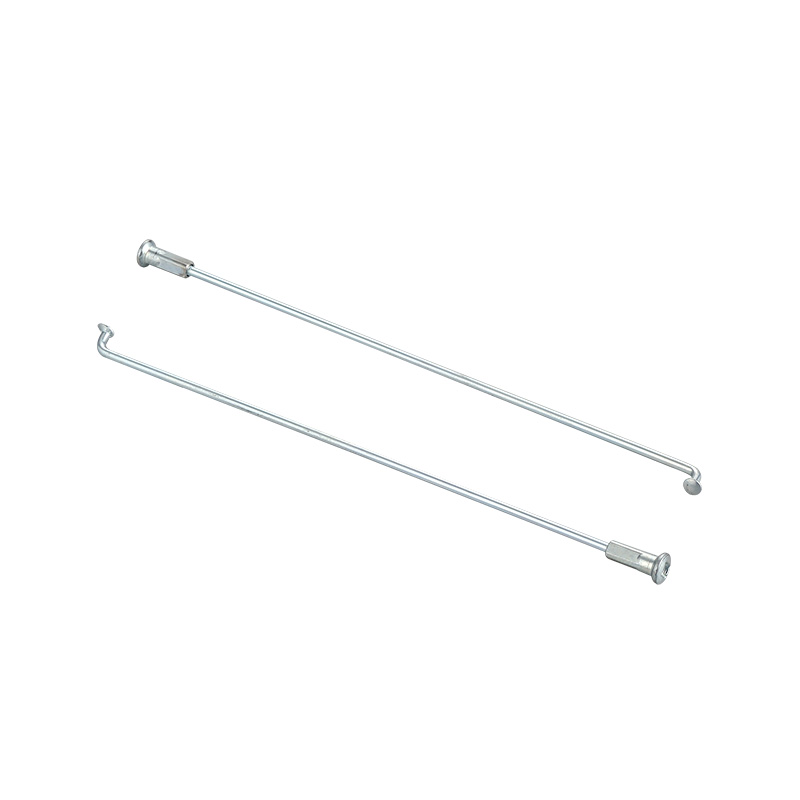
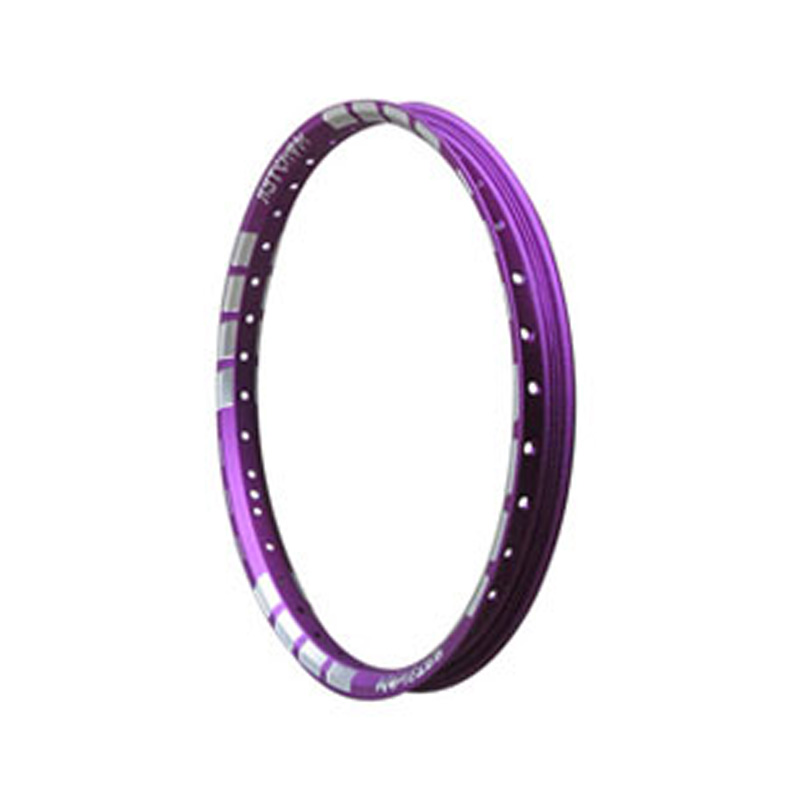
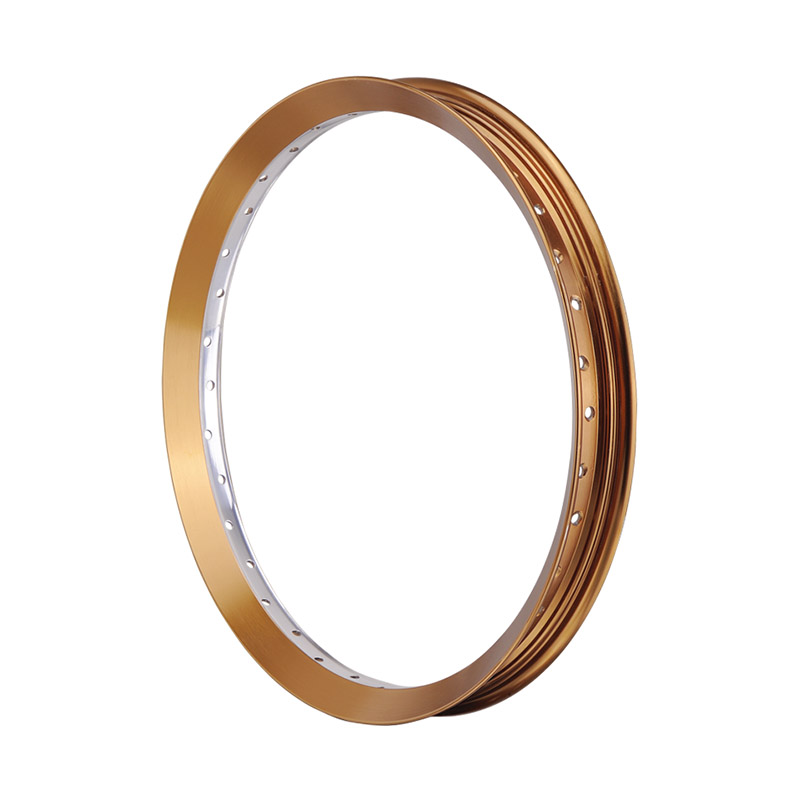
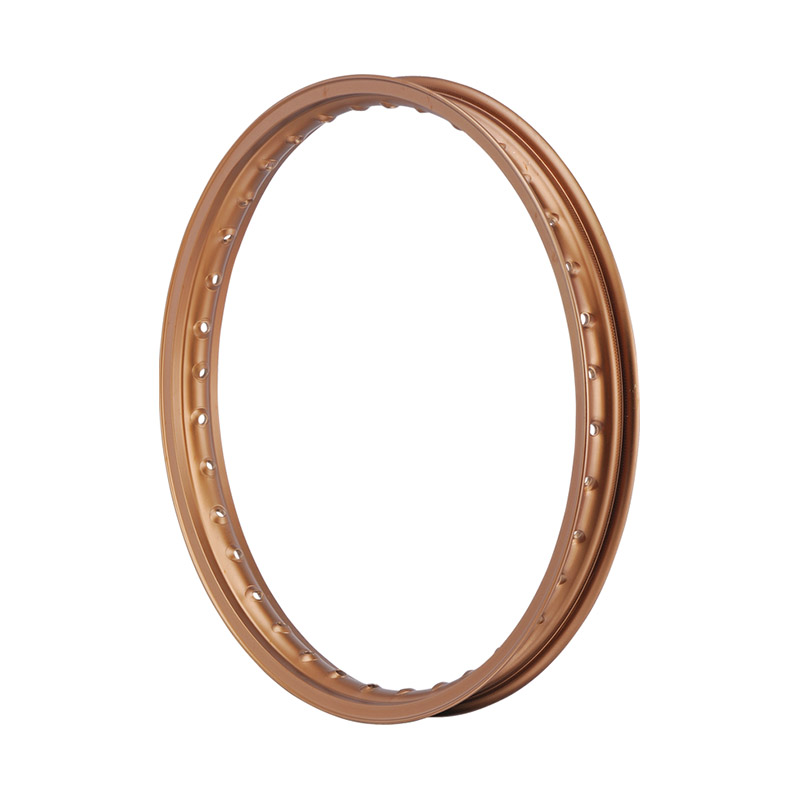
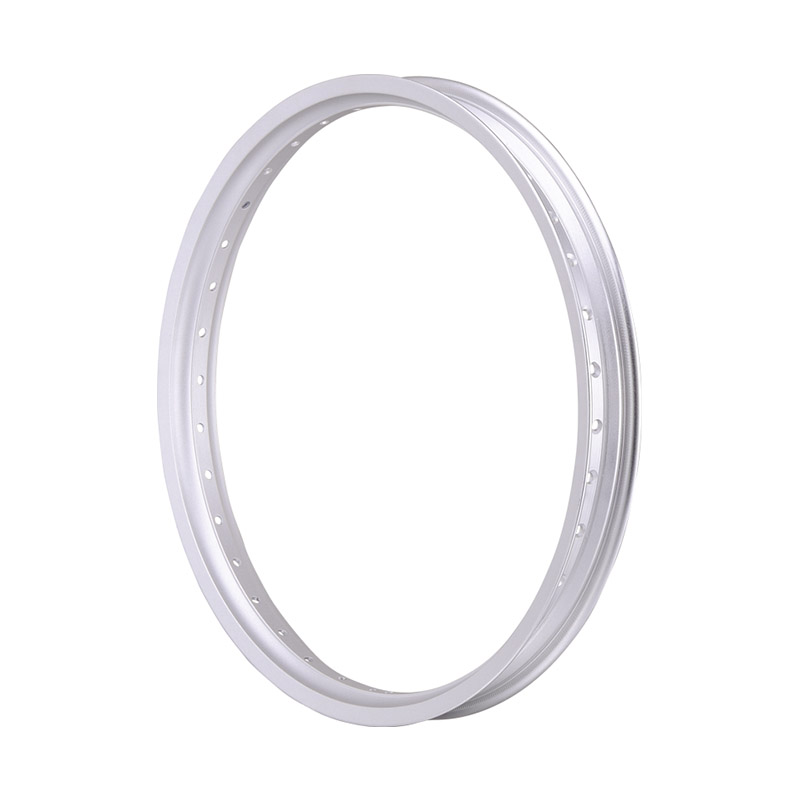
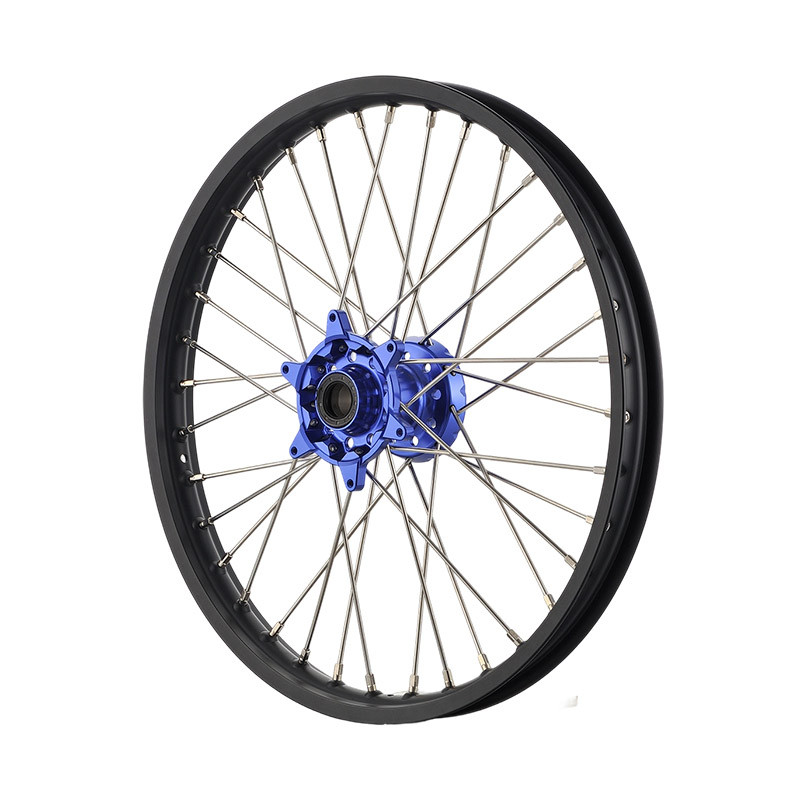
Aluminum alloy is widely used in Supermoto wheel construction, but the complete wheel includes several components. Current aftermarket examples use 7050-T6 aluminum for the rim, 6082-T6 aluminum for CNC-machined hubs, and 304 stainless-steel spokes.
| Component | Example Specification | Role |
| Rim | 7050-T6 aluminum | Supports the tire and transfers wheel loads |
| Hub | 6082-T6 aluminum | Connects the wheel with axle and brake components |
| Spokes | 304 stainless steel | Connects hub and rim while distributing loads |
| Nipple | Alloy or brass | Secures and tensions the spokes |
This construction can provide a useful balance between structural support and manageable wheel mass. However, the specification of the alloy alone cannot determine whether a wheel is suitable for a particular motorcycle.
Brake Hardware Can Change the Purpose of the Wheelset
A Supermoto conversion is often accompanied by a brake upgrade. This is particularly relevant because the motorcycle may transition from a dirt-oriented braking setup to higher-speed pavement riding.
Aftermarket Supermoto wheel packages can be supplied with larger front brake discs. Examples currently on the market include 310 mm and 320 mm front rotors, along with rear rotors around 220–240 mm, depending on the motorcycle application.
The wheel, rotor, caliper bracket, axle spacers, and hub must work together. A 17-inch rim with the wrong rotor offset can create a fitment problem even though the wheel diameter is correct.
Brake Compatibility Checklist
- Confirm rotor diameter.
- Check rotor offset and mounting pattern.
- Verify caliper bracket compatibility.
- Confirm axle and spacer dimensions.
- Check wheel clearance around the brake assembly.
What Happens to the Bike's Geometry?
Moving from a traditional 21-inch front wheel to a 17-inch front wheel changes more than appearance. The overall wheel-and-tire diameter becomes smaller, which can influence front-end height, steering geometry, and ground clearance.
A real-world Yamaha WR250R Supermoto conversion, for example, required attention to the front brake-line routing and fork-protector clearance after installing 17-inch wheels. The conversion also used a shorter kickstand because of the altered motorcycle stance.
That example illustrates an important point: a Supermoto wheel conversion should be evaluated as a chassis modification rather than a simple wheel replacement.
Could the Same Wheels Handle Occasional Track Days?
Yes, provided the wheelset, tires, brakes, and motorcycle setup are appropriate for the intended track environment.
A street-oriented 17-inch wheelset can provide the basic platform for occasional track use. However, tire temperature range, brake performance, suspension setup, gearing, and rider skill become increasingly important as track intensity rises.
Some complete Supermoto wheel packages are specifically sold with combinations such as 110/70-17 front and 150/70-17 rear tires, while other applications use 140/70-17 rear tires.
There is therefore no universal “track tire” specification. The appropriate setup depends on motorcycle weight, engine output, circuit layout, tire construction, and competition requirements.
Street Setup or Track Tool?
The interesting feature of Motorcycle Supermoto Alloy Wheels is their flexibility. The same basic 17-inch wheel architecture can support very different motorcycle roles.
| Rider Objective | Wheel/Tire Direction | Additional Focus |
| Daily street riding | 17-inch road-oriented setup | Wet grip, tire availability, comfort |
| Sporty road riding | 17-inch sport tire package | Cornering response and braking |
| Occasional track day | 17-inch performance setup | Tire temperature and brake capacity |
| Dedicated Supermoto racing | Race-oriented wheel and tire package | Class rules and circuit setup |
This flexibility explains why 17-inch wheels have become such a recognizable part of Supermoto design. Riders can retain the lightweight, compact character of a dirt-bike chassis while accessing a much broader road-tire market.
What Should Buyers Verify Before Ordering?
The motorcycle model and model year should be treated as key specifications rather than secondary information. Current wheel suppliers list different fitments for different Honda, Yamaha, KTM, Suzuki, and other platforms, even when the wheel dimensions look identical.
- Rim size: confirm front and rear diameter and width.
- Hub dimensions: verify axle diameter and hub width.
- Bearing and spacer: check the complete fitment specification.
- Brake disc: verify diameter, bolt pattern, and offset.
- Sprocket: confirm rear sprocket compatibility and desired gearing.
- Tire: match tire size and construction with the rim width.
- Clearance: inspect fork, swingarm, chain, brake, and fender clearance.
The Wheel Does Not Decide the Riding Category Alone
A 17-inch Supermoto wheel can serve a street motorcycle, a weekend canyon bike, or a track-oriented dirt-bike conversion. The distinction comes from the complete package.
Rim width determines the tire platform, the tire influences road behavior, brake hardware affects stopping performance, and chassis setup determines how the motorcycle responds to the new wheel diameter.
For riders focused on public roads, a 17-inch setup offers access to a broad range of road-approved tire formats. Track riders can use the same basic wheel architecture with tires and braking equipment suited to circuit riding. The two applications may share the same 3.5 × 17-inch front and 4.25 × 17-inch rear dimensions, yet their supporting components can be very different.
That makes the real question less about whether Motorcycle Supermoto Alloy Wheels belong on the street or the track. Their value comes from how effectively the wheel specification, tire, brakes, and motorcycle geometry are matched to the intended riding environment.


 浙公网安备33071802889078

